Hollywood has always been bad at knowing what it has.
Some of the most beloved films in cinema history were written off on release — pulled from theatres early, dismissed by critics, quietly shelved by studios who'd already moved on. The box office doesn't lie, the thinking went. If audiences didn't show up, the film didn't matter.
Except they were wrong. Because audiences did show up — just not on opening weekend. They showed up at midnight screenings, in rep cinemas, on worn-out VHS tapes passed between friends. They showed up slowly, obsessively, in the way that only truly great films inspire.
These are ten of the best.
1. The Warriors (1979)
Walter Hill's neon-drenched gang epic cost $4 million and made $22 million at the box office — which sounds fine until you account for the fact that Paramount spent heavily on marketing, and that the film was pulled from several theatres after reports of violence at screenings across the US. Critics were mixed. The studio was nervous.
What happened next took years. The Warriors found its audience on cable TV and VHS, where its extraordinary visual style — each gang dressed like a fever dream, Manhattan at night as pure myth — hit differently without the moral panic surrounding it. Today it's one of the most quoted, most referenced, most loved films of its era. Can you dig it?
2. Big Trouble in Little China (1986)
John Carpenter made this immediately after Starman, riding relatively good commercial will, and watched it get absolutely buried. 20th Century Fox panicked about the budget, changed the marketing strategy mid-campaign, and released it the same weekend as Aliens. It grossed $11 million against a $25 million budget and effectively ended Carpenter's relationship with major studio filmmaking.
The film itself is a masterpiece of tone — a kung fu fantasy action comedy in which the supposed hero is utterly useless and completely unbothered by this fact. It took video rental to reveal what Fox had missed: an audience that would rewatch it endlessly, quote it verbatim, and never quite get over it.
3. Flash Gordon (1980)
Dino De Laurentiis spent $35 million making Flash Gordon and watched it gross $27 million in North America. By any studio accounting, a failure. By any cultural accounting, something else entirely.
Mike Hodges' film is operatic, ridiculous, ludicrously designed, and scored by Queen in a way that somehow makes all of it feel like the most important thing that has ever happened. It was too strange for mainstream audiences in 1980. It was absolutely perfect for everyone who found it later.
4. Blade Runner (1982)
Few box office disappointments carry as much weight as Ridley Scott's 1982 science fiction landmark. Made for $28 million, it grossed $33 million worldwide — technically profitable but considered a commercial disappointment given the scale of the production and the studio's expectations.
The response was brutal. Audiences found it slow. The voiceover — imposed by the studio — felt laboured. Critics were divided. Harrison Ford, then the biggest star in the world off the back of Raiders of the Lost Ark, couldn't pull it over the line.
What followed was a decades-long critical reassessment that now places Blade Runner among the greatest films ever made. The Director's Cut (1992) and Final Cut (2007) stripped away the studio's compromises and revealed the film Scott had intended. Entire careers have been spent analysing it. It is, quietly, the film that defined what science fiction could look like.
5. The Thing (1982)
John Carpenter appears twice on this list because Hollywood failed him twice in the same year. The Thing opened two weeks after E.T. the Extra-Terrestrial, into an audience that wanted warmth, wonder, and a friendly alien. What Carpenter offered instead was paranoia, body horror, and one of the bleakest endings in mainstream cinema history.
It was destroyed. Critics called it gratuitous. Audiences stayed away. It grossed $19 million against a $15 million budget — technically in profit, practically a disaster given its ambitions.
Time has been extraordinarily kind. The Thing is now considered the definitive body horror film, Rob Bottin's practical effects work studied and celebrated in equal measure. The ending still hits like a closed fist.
6. Heathers (1988)
Michael Lehmann's pitch-black high school satire was too dark, too strange, and too uncomfortable for mainstream distribution. It played in limited release, made almost nothing, and was largely ignored.
Then it landed on home video, where teenagers found it and immediately understood it in a way studio executives never had. Winona Ryder and Christian Slater as teen killers delivering deadpan monologues about social hierarchy felt less like a movie and more like a survival manual. It still does.
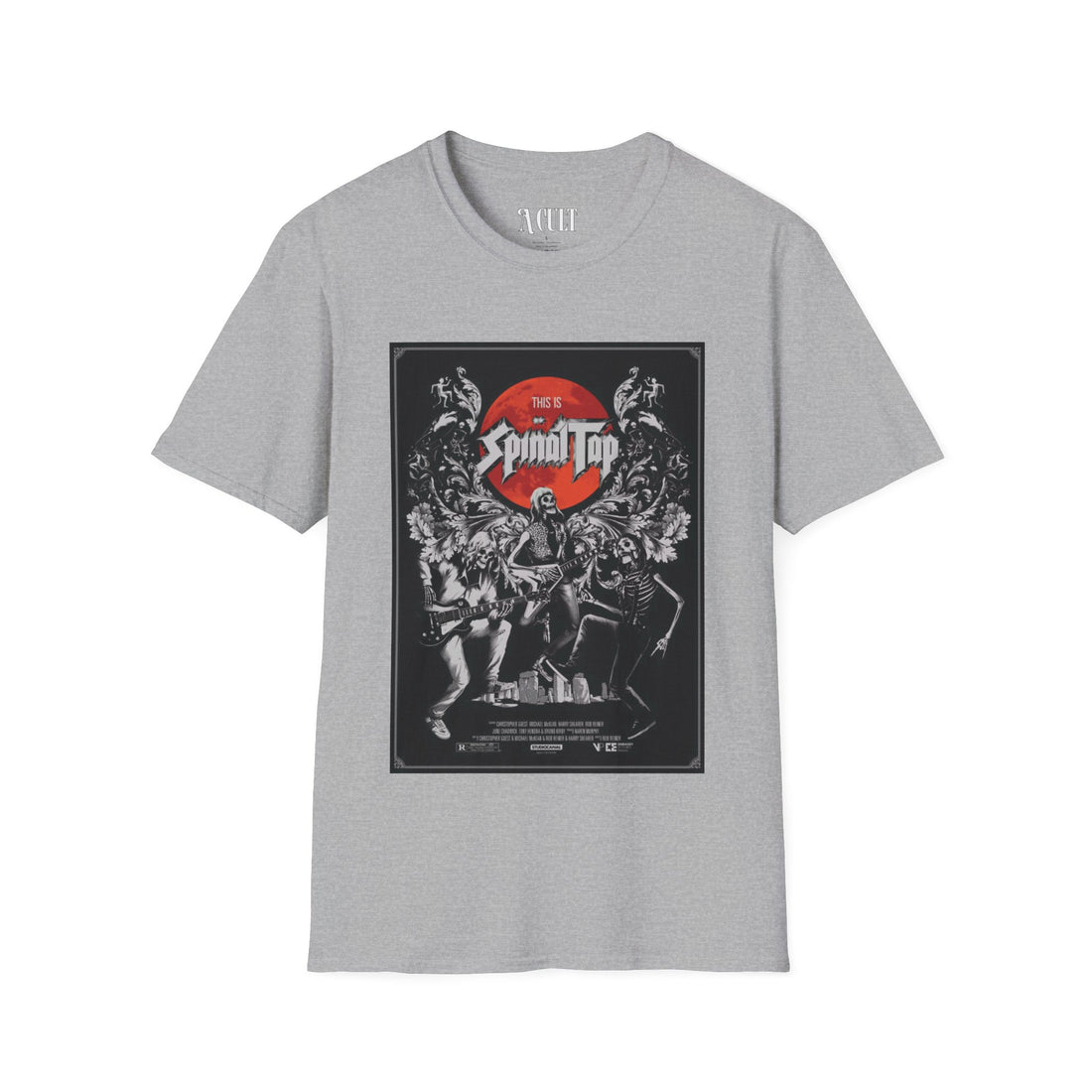
7. This Is Spinal Tap (1984)
Rob Reiner's mockumentary about a fictional British heavy metal band was a genuine oddity on release — a film with no stars, no plot, and no real precedent. It grossed $4.7 million against a $2.25 million budget, which looks fine until you consider that it had almost no theatrical run to speak of.
HBO saved it. Cable audiences got it immediately, and the word spread in the way that only comedy with genuine depth inspires. Thirty years later it is the benchmark against which every mockumentary is measured, and "these go to eleven" has entered the language permanently.
8. The Rocky Horror Picture Show (1975)
Possibly the most extreme example on this list. Rocky Horror opened to almost nothing — it was pulled from its initial wide release within weeks and written off entirely. 20th Century Fox had no idea what they had.
What saved it was a single midnight screening at the Waverly Theatre in New York in 1976, which became a weekly event, which became a phenomenon. The audience participation format — dressing up, shouting at the screen, throwing toast — was entirely audience-invented, entirely organic. No studio could have planned it. Rocky Horror became the longest-running theatrical release in cinema history purely because audiences refused to let it die.
9. Donnie Darko (2001)
Richard Kelly's time-travel coming-of-age nightmare was released in limited US theatres in October 2001, six weeks after 9/11, to almost total silence. A film featuring a commercial aircraft engine crashing into a suburban house was perhaps not the easiest sell that particular autumn. It grossed $517,000 in North America.
The UK theatrical release, handled independently, performed significantly better. And then the DVD arrived. Donnie Darko became a dorm room staple, a late-night obsession, a film that demanded multiple viewings just to begin to understand it. The Director's Cut followed. The reassessment accelerated. It now sits comfortably among the defining cult films of its generation.
10. Miami Connection (1987)
The purest entry on this list. Y.K. Kim's martial arts rock band ninja epic was self-financed, self-distributed, pulled from theatres after a week, and sat in a warehouse for twenty years before Drafthouse Films acquired the print and released it in 2012.
There is no cynicism in Miami Connection. Every frame was made by people who genuinely believed in what they were doing. The fight scenes are chaotic. The music is sincere. The message — that friendship and taekwondo can defeat drug-dealing ninjas — is delivered with complete conviction. It is one of the most purely joyful cult films ever made, and it almost ceased to exist entirely.
The Real Story
The through-line in all of these isn't quality. It's timing. Most of these films arrived before their audiences were ready, or in the wrong distribution window, or simply next to a bigger film that swallowed all the oxygen.
What separates a cult classic from a forgotten film is usually one thing: someone who cared enough to keep talking about it. A midnight programmer. A video store employee. A friend with a worn-out tape and two hours to kill.
That's always how it works.
Wear the films that never got their due. Browse the A Cult cult cinema collection at acultcompany.com/collections/cult-film — and if it's your first order, there's 10% off waiting for you at checkout.